What is Spatial Multiomics? A Beginner's Guide to the Future of Biological Research
Learn what Spatial Multiomics is, how Spatial Transcriptomics and Spatial Proteomics work, their applications, benefits, technologies, and future in biological research.
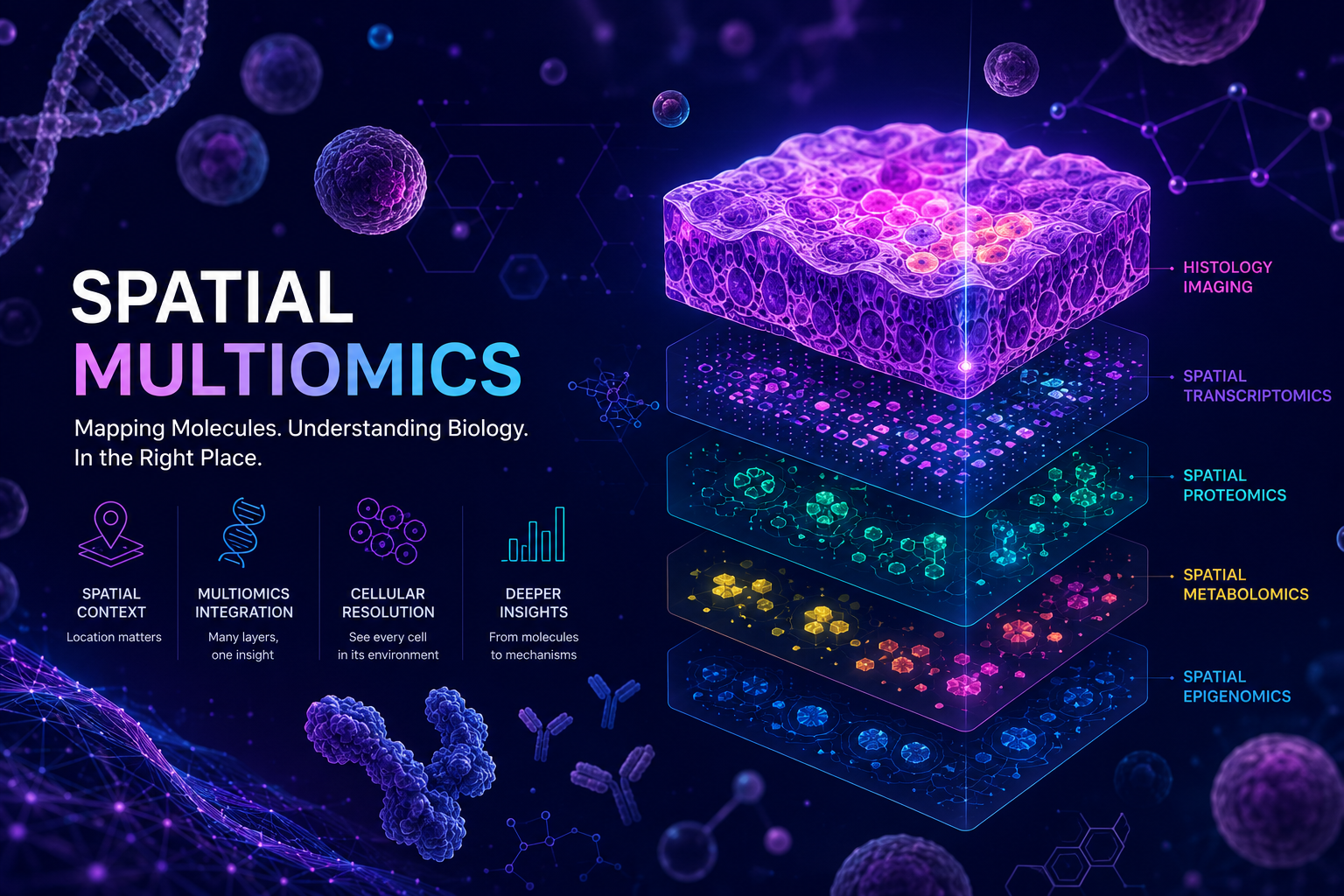
What is Spatial Multiomics?
Spatial Multiomics is an advanced research approach that combines multiple layers of biological information—such as gene expression, proteins, metabolites, and cellular interactions—while preserving the precise location of cells within tissues.
Unlike conventional sequencing methods that analyze dissociated cells, Spatial Multiomics enables researchers to study molecular activity exactly where it occurs, providing a comprehensive understanding of tissue organization and cellular function.
As one of the fastest-growing technologies in life sciences, Spatial Multiomics is becoming an essential tool in genomics, molecular biology, developmental biology, neuroscience, immunology, and precision research.
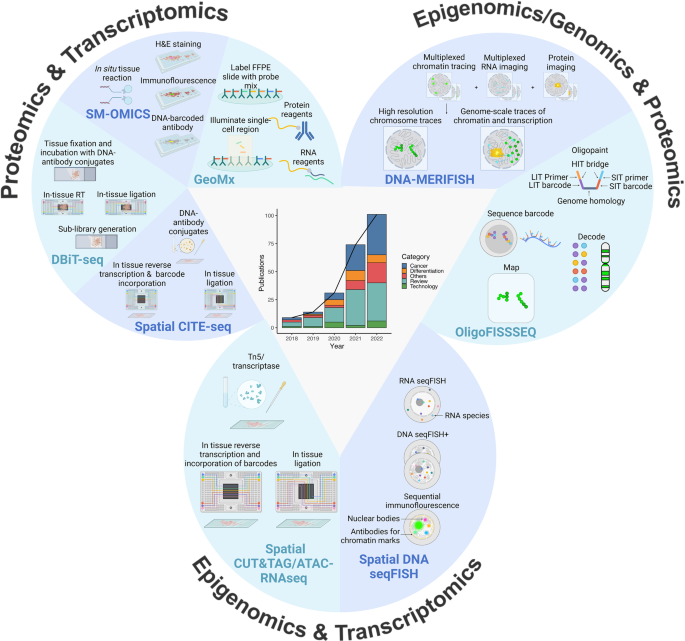
Multiomics Explained
What is Multiomics?
Multiomics refers to the integration of several "omics" technologies to study biological systems from multiple perspectives.
These include:
Genomics
Transcriptomics
Proteomics
Metabolomics
Epigenomics
Lipidomics
Instead of analyzing a single molecular layer, researchers combine datasets to understand how biological processes are coordinated.
This integrated strategy offers a far more complete picture than individual omics approaches.
Why Add Spatial Information?
Traditional multiomics often loses tissue architecture because samples are broken into individual cells.
Spatial technologies preserve:
Cell location
Tissue organization
Cell-to-cell communication
Molecular gradients
Functional microenvironments
Adding spatial context allows researchers to determine not only what molecules are present, but also where they are active.
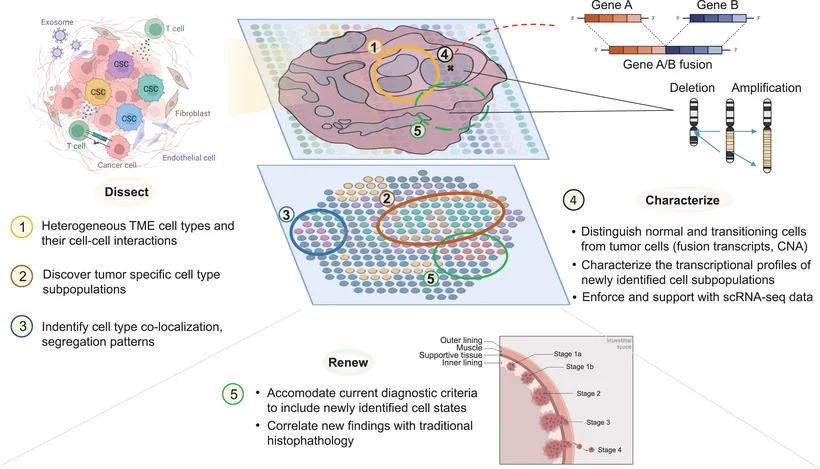
What is Spatial Proteomics?
Mapping Proteins Inside Tissues
While transcriptomics studies RNA, Spatial Proteomics focuses on proteins.
Proteins are responsible for nearly every cellular function, making them critical for understanding biological activity.
Spatial Proteomics identifies:
Protein abundance
Protein localization
Cell signaling
Molecular interactions
Tissue organization
Because protein levels do not always correlate directly with RNA expression, combining transcriptomics and proteomics creates a much richer biological dataset.
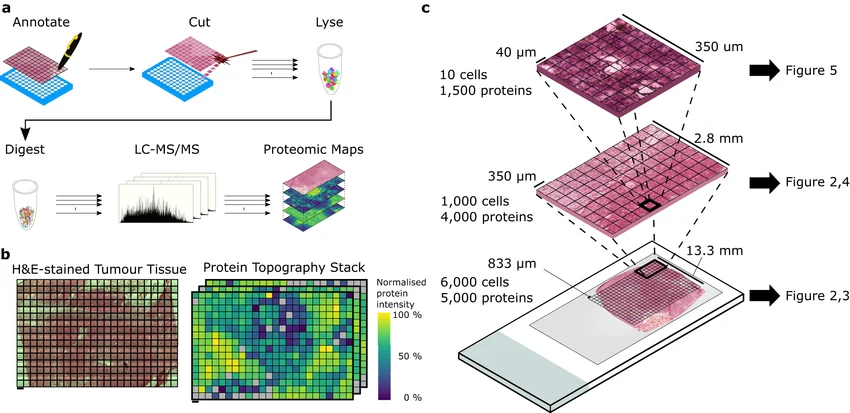
Why Combine Transcriptomics and Proteomics?
Spatial Multiomics integrates multiple molecular layers into a single experiment.
For example:
Molecular Layer | Information Obtained |
|---|---|
Spatial Transcriptomics | Gene expression |
Spatial Proteomics | Protein distribution |
Spatial Metabolomics | Metabolic activity |
Spatial Epigenomics | Gene regulation |
Histology Imaging | Tissue morphology |
The result is a multidimensional understanding of biological systems.
Related products
DNA RNA Extraction
RNA Extraction Kit
miRNA Extraction Kit
Up RNA Extraction Kit
Swab RNA Extraction Kit
Swab RNA Extraction Kit
Plant Tissue Preservation Solution
Tissue Preservation Medium (DMSO-free)
Rapid Tissue Preservation Solution
MARS Sample Preparation (SP)
PCR Sample Preparation Solution
Imaging System
Conclusion
Spatial Multiomics is transforming biological research by combining multiple molecular datasets with precise spatial information. By integrating Spatial Transcriptomics, Spatial Proteomics, and other omics technologies, researchers gain a more complete understanding of tissue organization, cellular interactions, and molecular function.
As sequencing, imaging, and computational technologies continue to evolve, Spatial Multiomics will remain a cornerstone of next-generation life science research, enabling deeper insights into complex biological systems and accelerating discoveries across genomics, cell biology, neuroscience, developmental biology, and many other scientific disciplines.