Organoids & Organ-on-a-Chip: The Future of 3D Cell Models in Biomedical Research
Explore how organoids and organ-on-a-chip technologies are transforming biomedical research by providing advanced 3D human tissue models that closely mimic real organ function. Learn how these innovative platforms support drug discovery, toxicology, stem cell research, cancer research, regenerative medicine, precision medicine, disease modeling, and biomarker discovery. This comprehensive guide covers the differences between organoids and organ-on-a-chip systems, their applications, advantages, challenges, future trends, and the essential laboratory products researchers need. Discover how Gentaur supports scientists with high-quality reagents, cell culture solutions, molecular biology products, extracellular matrix materials, antibodies, and microfluidic technologies for reliable and reproducible research.
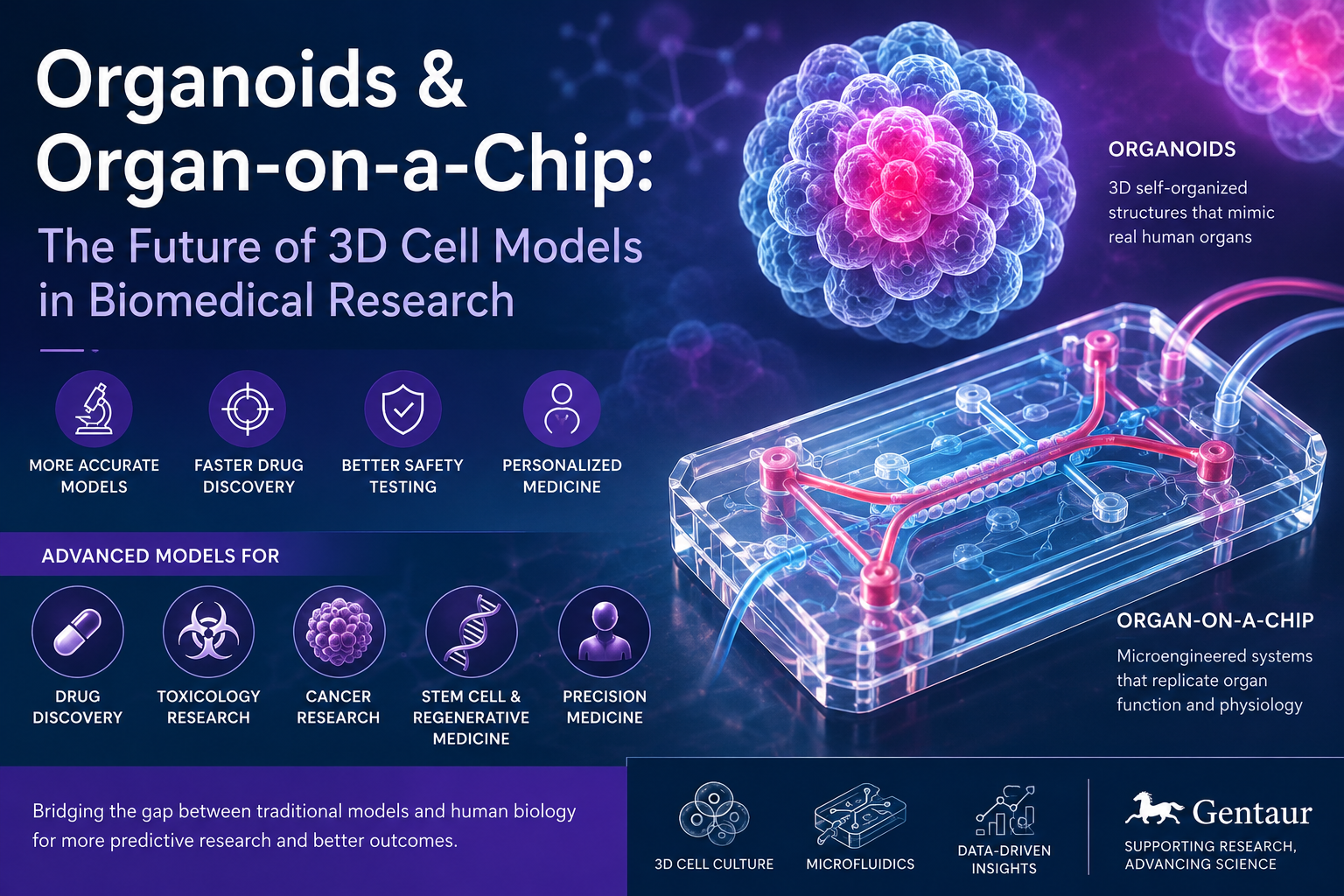
What Are Organoids?
Organoids are three-dimensional (3D) cellular structures grown from stem cells that self-organize into miniature versions of human organs.
Unlike conventional monolayer cultures, organoids preserve:
Cellular diversity
Tissue architecture
Cell-to-cell communication
Functional organization
Biological complexity
Because they closely resemble native tissues, organoids have become valuable experimental models for studying human biology.
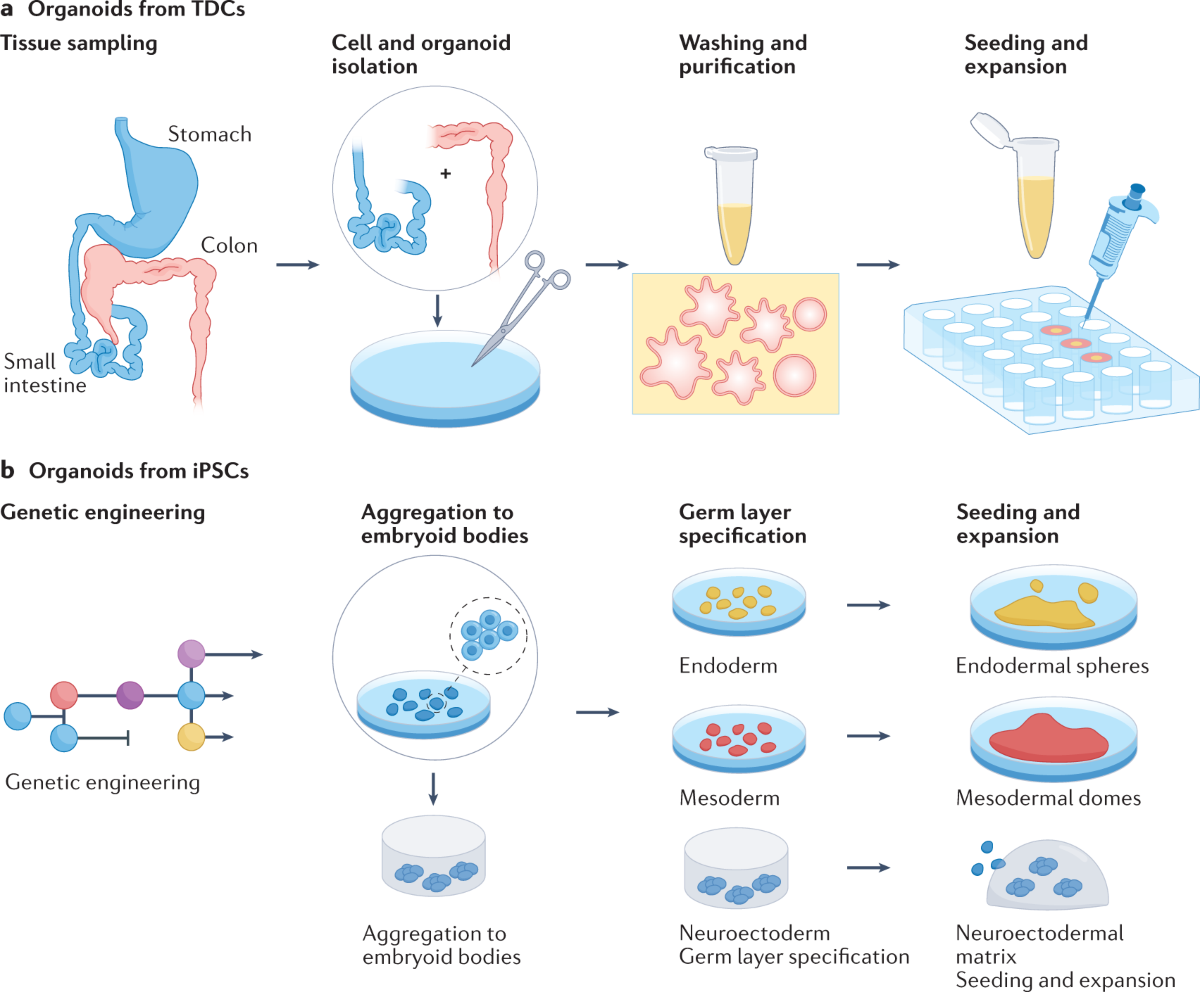
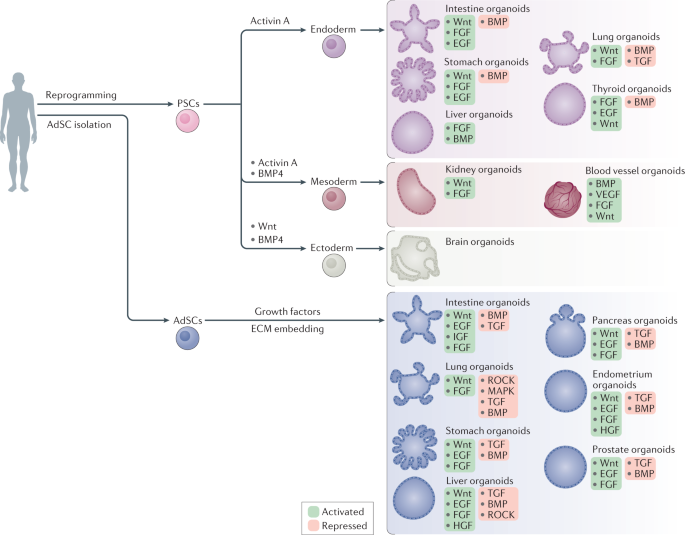
Common Types of Organoids
Researchers have successfully developed organoids representing numerous organs, including:
Brain organoids
Liver organoids
Kidney organoids
Lung organoids
Intestinal organoids
Pancreatic organoids
Cardiac organoids
Retinal organoids
Gastric organoids
Skin organoids
Tumor organoids
Each model offers unique opportunities for studying organ development, physiology, and disease mechanisms.
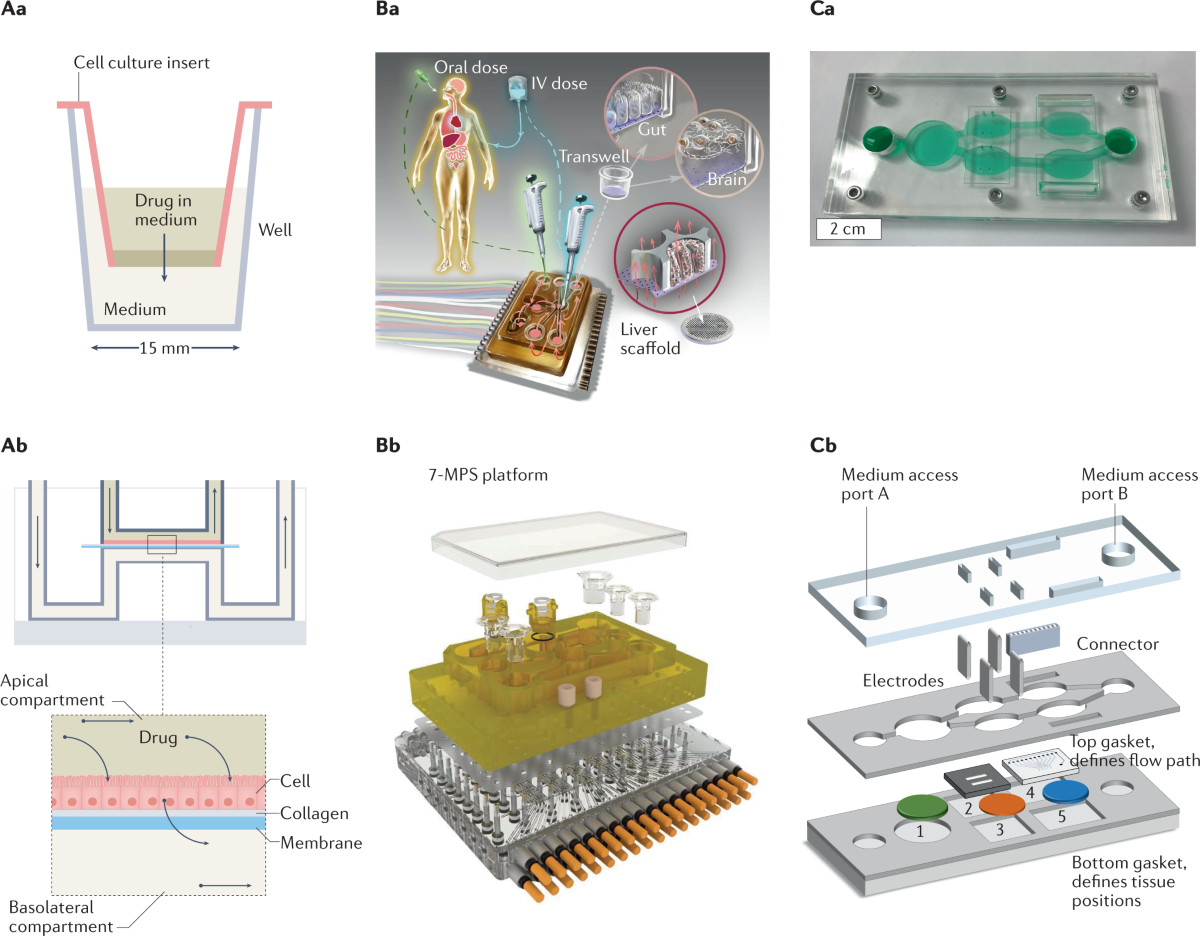
Understanding Organ-on-a-Chip Technology
Organ-on-a-chip technology combines:
Microfluidics
Biomaterials
Living cells
Tissue engineering
Bioengineering
within miniature devices that recreate physiological environments.
These microengineered chips allow researchers to simulate:
Blood circulation
Mechanical forces
Nutrient exchange
Oxygen gradients
Cellular interactions
Tissue interfaces
The result is a laboratory platform capable of reproducing dynamic biological conditions that cannot be achieved using traditional static cultures.
Organoids vs Organ-on-a-Chip
Organoids | Organ-on-a-Chip |
|---|---|
Self-organized 3D tissues | Microengineered devices |
Derived from stem cells | Uses multiple cell types |
Mimics tissue architecture | Mimics tissue function and mechanics |
Excellent for developmental biology | Excellent for physiological simulation |
Limited fluid flow | Controlled microfluidic environment |
Long-term culture | Dynamic experimental control |
Many laboratories now combine both technologies to create even more realistic experimental systems.
Why Researchers Are Adopting Organoids
Traditional laboratory models often fail to capture the complexity of human tissues.
Organoids provide several advantages:
More Physiologically Relevant Models
Three-dimensional organization improves biological relevance.
Human-Based Research Models
Human-derived cells reduce species differences commonly encountered with animal models.
Improved Cellular Communication
Multiple cell populations interact naturally within organoids.
Long-Term Culture
Many organoid systems remain viable for weeks or months.
Personalized Research
Patient-derived organoids support individualized research strategies.
High Experimental Flexibility
Researchers can investigate:
Cell differentiation
Tissue regeneration
Gene function
Host-pathogen interactions
Developmental biology
Precision medicine
Advantages of Organ-on-a-Chip Systems
Microphysiological systems provide researchers with highly controlled laboratory environments.
Major benefits include:
Continuous perfusion
Mechanical stimulation
Real-time monitoring
Controlled biochemical gradients
Reduced reagent consumption
Enhanced imaging capabilities
High reproducibility
Automation compatibility
These features improve experimental consistency while enabling complex biological investigations.

Applications in Biomedical Research
Toxicology Research
Researchers evaluate:
Chemical toxicity
Environmental contaminants
Cosmetic ingredients
Industrial chemicals
Food safety compounds
Advanced tissue models improve safety assessments while reducing dependence on animal testing.
Cancer Research
Patient-derived tumor organoids have become powerful laboratory tools.
Applications include:
Tumor biology
Biomarker discovery
Drug sensitivity studies
Personalized therapeutic research
Tumor heterogeneity analysis
Precision oncology
Stem Cell Research
Organoids provide ideal systems for studying:
Stem cell differentiation
Tissue development
Cellular maturation
Developmental pathways
Regenerative biology
Infectious Disease Research
Researchers investigate interactions between microorganisms and host tissues using organoids that replicate relevant organ environments.
Applications include:
Respiratory models
Gastrointestinal models
Brain infection studies
Liver infection research
Neuroscience Research
Brain organoids have transformed neuroscience.
Scientists investigate:
Neural development
Synapse formation
Neurodevelopmental disorders
Brain connectivity
Cellular signaling
Precision Medicine
Patient-derived organoids support individualized research by preserving genetic characteristics of donor tissues.
Researchers can compare biological responses between different patients, supporting biomarker discovery and translational research.
Frequently asked questions
What is an organoid?+
An organoid is a three-dimensional cellular model derived from stem cells that self-organizes into a miniature tissue resembling a human organ.
What is an organ-on-a-chip?+
An organ-on-a-chip is a microfluidic device containing living cells that recreates physiological tissue environments for laboratory research.
What is the difference between organoids and organ-on-a-chip?+
Organoids are self-organized 3D tissues, while organ-on-a-chip systems use engineered microfluidic platforms to simulate tissue function and physiological conditions. Many researchers combine both technologies for more advanced experimental models.
What are organoids used for?+
Organoids are widely used in developmental biology, cancer research, neuroscience, regenerative medicine, infectious disease research, toxicology, biomarker discovery, and precision medicine.
What products are needed for organoid research?+
Typical laboratory workflows require stem cell culture media, extracellular matrix reagents, growth factors, antibodies, molecular biology kits, imaging reagents, protein analysis tools, and microfluidic components.