Liquid Chromatography Mass Spectrometry (LC-MS/MS) Guide
Learn how LC-MS and LC-MS/MS work, including liquid chromatography, ionization, tandem mass spectrometry, applications, validation, advantages and limitations.
What Is Liquid Chromatography Mass Spectrometry?
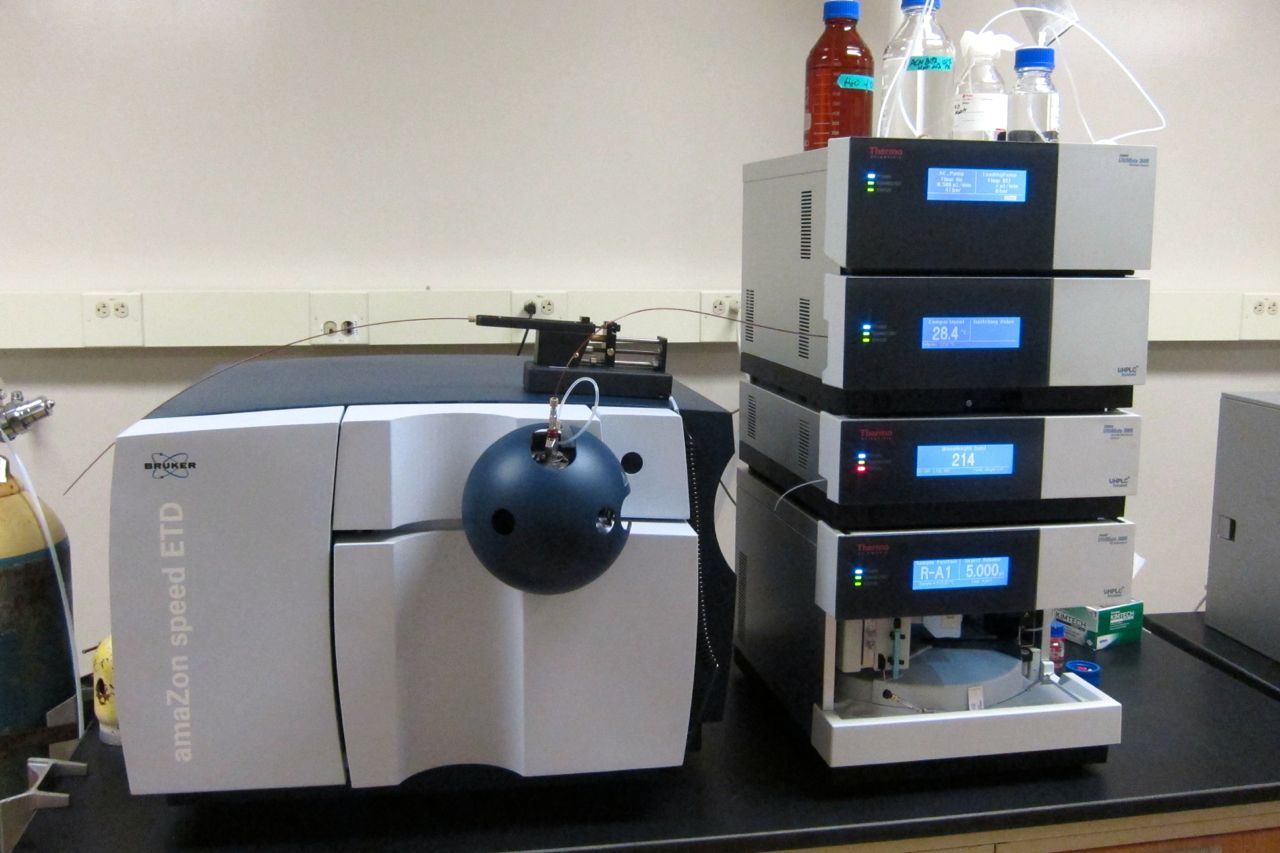
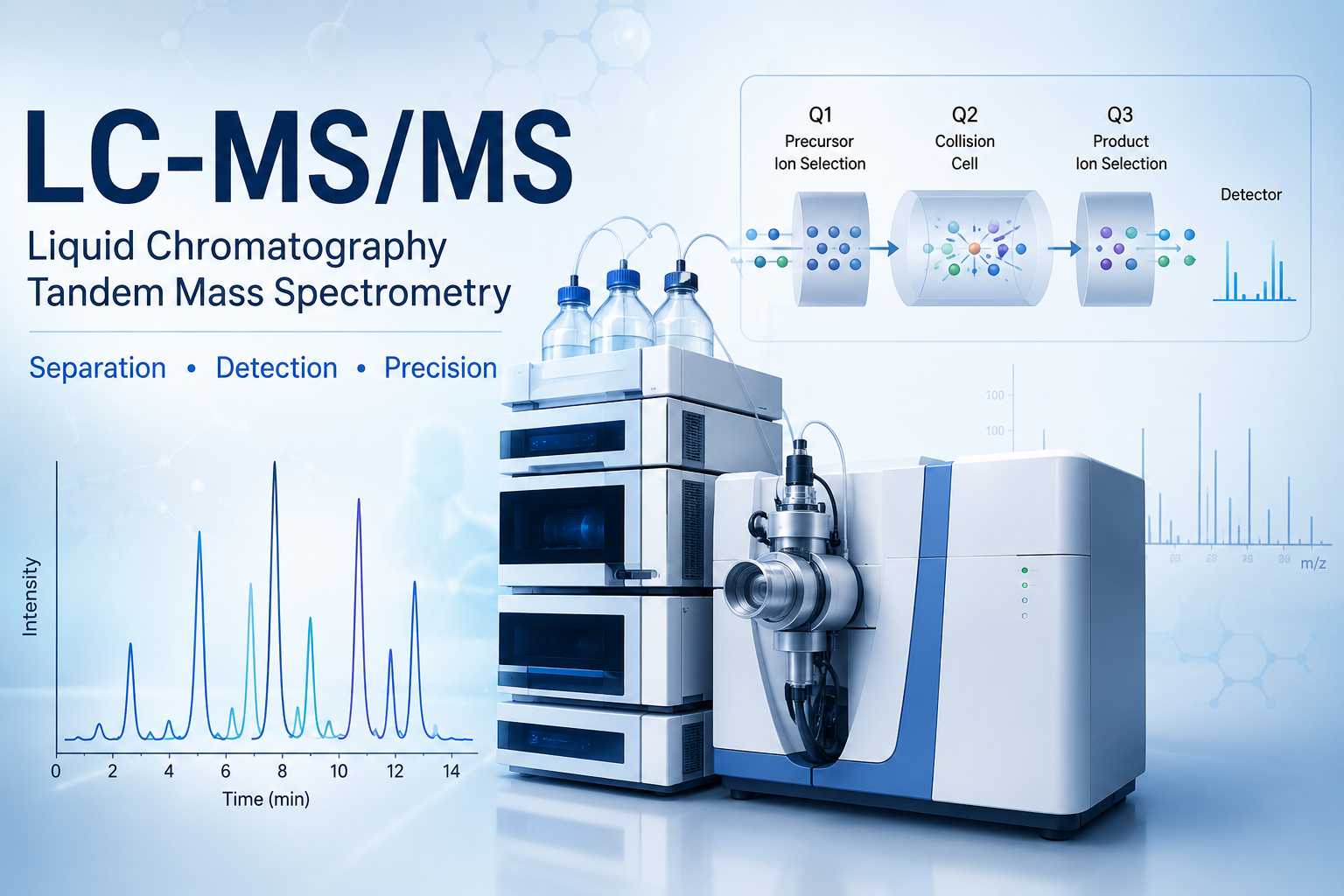
Liquid chromatography-mass spectrometry (LC-MS) is an analytical technique that combines the separation power of liquid chromatography with the molecular detection and identification capabilities of mass spectrometry.
In an LC-MS analysis, compounds in a sample are first separated by liquid chromatography (LC). As they leave the chromatographic column, they are converted into gas-phase ions, commonly by electrospray ionization (ESI) or atmospheric-pressure chemical ionization (APCI). The mass spectrometer then separates and detects those ions according to their mass-to-charge ratio, or m/z.
When two stages of mass analysis are combined, the technique is called liquid chromatography-tandem mass spectrometry (LC-MS/MS).
LC-MS and LC-MS/MS are now important analytical platforms in pharmaceutical research, clinical chemistry, metabolomics, toxicology, therapeutic drug monitoring, food analysis, environmental research and many areas of biomedical science. Modern reviews describe LC-MS/MS as especially useful because of its combination of analytical specificity, sensitivity and ability to measure multiple analytes.
Is It “Mass Spectroscopy” or “Mass Spectrometry” ?
Both phrases occur frequently in online searches, which is why researchers may search for:
liquid chromatography mass spectroscopy;
liquid chromatography-mass spectroscopy;
liquid chromatography tandem mass spectroscopy;
liquid chromatography - mass spectroscopy.
However, mass spectrometry is the scientifically preferred term.
A mass spectrometer measures properties of ions, particularly their mass-to-charge ratio. The resulting pattern is a mass spectrum, and the analytical technique is mass spectrometry.
Therefore :
- Preferred scientific terminology: Liquid chromatography-mass spectrometry
- Abbreviation: LC-MS
and :
- Liquid chromatography-tandem mass spectrometry
- Abbreviation: LC-MS/MS
The phrase liquid chromatography mass spectroscopy is nevertheless widely used as a search term and usually refers to the same analytical technology.
What Does LC-MS Stand For ?
LC-MS stands for Liquid Chromatography-Mass Spectrometry.
You may also encounter several related abbreviations:
| Abbreviation | Meaning |
|---|---|
| LC-MS | Liquid chromatography-mass spectrometry |
| LC/MS | Alternative notation for LC-MS |
| LCMS | Informal compact abbreviation |
| LC-MS/MS | Liquid chromatography-tandem mass spectrometry |
| LC/MS/MS | Alternative notation for LC-MS/MS |
| HPLC-MS | High-performance liquid chromatography coupled to MS |
| HPLC-MS/MS | HPLC coupled to tandem mass spectrometry |
| UHPLC-MS/MS | Ultra-high-performance liquid chromatography coupled to tandem MS |
In modern bioanalytical laboratories, LC-MS/MS commonly refers to liquid chromatography connected to a tandem mass spectrometer, often a triple-quadrupole instrument for targeted quantitative analysis.
How Does Liquid Chromatography-Mass Spectrometry Work?
LC-MS vs LC-MS/MS: What Is the Difference?
| Feature | LC-MS | LC-MS/MS |
|---|---|---|
| Chromatographic separation | Yes | Yes |
| Mass analysis | One primary stage | Multiple stages |
| Precursor selection | Limited/system-dependent | Yes |
| Controlled fragmentation | Not necessarily | Yes |
| Product-ion measurement | Not necessarily | Yes |
| Targeted quantification | Possible | Excellent application |
| Structural information | Moderate to high depending on analyzer | Increased through fragmentation |
| Clinical targeted assays | Used | Very widely used |
| Common abbreviation | LC-MS | LC-MS/MS |
LC-MS determines the mass characteristics of ions after chromatographic separation. LC-MS/MS additionally selects and fragments ions, allowing characteristic precursor-to-product transitions to be measured.
Why Is LC-MS/MS So Powerful?
Targeted vs Untargeted LC-MS Analysis
What Is Multiple Reaction Monitoring?
A widely used targeted LC-MS/MS acquisition mode is multiple reaction monitoring, or MRM.
In MRM:
Q1 selects a predefined precursor ion.
Q2 fragments the precursor.
Q3 selects a predefined product ion.
The detector measures the signal for that transition.
For example:
precursor m/z → product m/z
Multiple transitions can be monitored during one chromatographic run.
This allows several target compounds and internal standards to be analyzed simultaneously.
Why Are Internal Standards Important in LC-MS/MS?
Quantitative LC-MS/MS commonly uses an internal standard.
Ideally, the internal standard behaves similarly to the target analyte during:
extraction
chromatography
ionization
detection
Stable isotope-labeled internal standards are often especially useful because their chemical behavior closely resembles the analyte while their mass difference allows separate mass-spectrometric detection.
Pitt's review of LC-MS in clinical biochemistry highlights the combination of tandem MS with stable isotope internal standards as an important approach for developing sensitive and accurate quantitative assays.
Why Are Internal Standards Important in LC-MS/MS?
One important challenge in LC-MS is the matrix effect.
Biological samples contain thousands of substances other than the analyte of interest.
Compounds that co-elute from the LC column may alter ion formation in the mass spectrometer.
This can cause:
Ion suppression - signal becomes lower.
Ion enhancement - signal becomes higher.
Matrix effects can therefore influence quantitative accuracy.
Strategies for controlling matrix effects include:
improved sample preparation
optimized chromatography
suitable internal standards
matrix-matched calibration
evaluation across multiple matrix sources
Regulatory guidance specifically recommends assessing matrix-related interference in quantitative LC-MS/MS bioanalytical methods.
How Is an LC-MS/MS Method Validated?
For quantitative applications, a method must demonstrate that it is suitable for its intended purpose.
Depending on the context, validation can evaluate parameters such as:
selectivity
specificity
calibration response
accuracy
precision
sensitivity
lower limit of quantification
recovery
matrix effects
carryover
dilution integrity
stability
robustness
ICH M10 Bioanalytical Method Validation and Study Sample Analysis provides harmonized recommendations for bioanalytical assays used in nonclinical and clinical studies supporting regulatory submissions.
For analytical procedures more broadly, ICH Q2(R2) provides an updated framework for analytical procedure validation, while ICH Q14 addresses science- and risk-based analytical procedure development.
| Advantages | Limitations |
|---|---|
| High analytical specificity | Expensive instrumentation |
| High sensitivity for many analytes | Requires experienced personnel |
| Multi-analyte capability | Matrix effects can affect ionization |
| Wide range of measurable compounds | Method development can be complex |
| Small sample volumes can be sufficient | Instrument maintenance is important |
| Quantitative capability | Calibration and QC require careful design |
| Structural information from fragmentation | Inter-laboratory standardization can be challenging |
LC-MS/MS therefore provides considerable analytical power, but successful implementation requires more than simply purchasing a mass spectrometer. Method development, validation, calibration, quality assurance, maintenance and staff expertise are all critical components.
What Is HPLC-MS/MS Specialized Testing?
Why Is LC-MS/MS Adoption Increasing?
Frequently Asked Questions About Liquid Chromatography Mass Spectrometry
What is liquid chromatography mass spectroscopy?+
“Liquid chromatography mass spectroscopy” is a commonly searched name for liquid chromatography-mass spectrometry (LC-MS). The scientifically preferred term is mass spectrometry. LC separates compounds in a liquid sample, while mass spectrometry detects ions according to their mass-to-charge ratio.
What is LC-MS?+
LC-MS stands for liquid chromatography-mass spectrometry. It couples chromatographic separation with mass-spectrometric detection.
What is LC-MS/MS?+
LC-MS/MS means liquid chromatography-tandem mass spectrometry. After liquid-chromatographic separation, precursor ions are selected, fragmented and analyzed through an additional stage of mass spectrometry.
What is the difference between LC-MS and LC-MS/MS?+
LC-MS measures ions following chromatographic separation. LC-MS/MS introduces an additional ion-selection and fragmentation stage, giving characteristic precursor-to-product ion information and often increasing analytical selectivity.
What does m/z mean?+
m/z means mass-to-charge ratio. Mass spectrometers distinguish ions partly according to this value.
What is a retention time?+
Retention time is the time required for a compound to travel through the chromatographic system and reach the detector under defined LC conditions.
What is MRM in LC-MS/MS?+
MRM means multiple reaction monitoring. It is a targeted tandem-MS mode in which predefined precursor-to-product ion transitions are monitored.
Why is LC-MS/MS used in clinical laboratories?+
LC-MS/MS can provide high specificity, sensitivity and multi-analyte capability. Applications include therapeutic drug monitoring, steroid analysis, vitamin measurement, newborn screening, amino acid analysis and toxicology.
What samples can be analyzed by LC-MS/MS?+
Depending on the validated method, samples can include serum, plasma, whole blood, urine, dried blood spots, tissues, cell extracts and other biological or chemical matrices.
Is LC-MS/MS quantitative?+
Yes. LC-MS/MS is widely used for quantitative analysis when appropriate calibration standards, internal standards, quality controls and validated analytical procedures are employed.
What is ion suppression?+
Ion suppression occurs when co-eluting matrix components reduce formation or detection of ions from the target analyte, resulting in reduced signal.
Why are isotope-labeled internal standards used?+
Stable isotope-labeled internal standards can compensate for variation during sample preparation, chromatography and ionization because they behave similarly to the target analyte while remaining distinguishable by mass spectrometry.
Why Is LC-MS/MS Adoption Increasing?
Scientific and Regulatory References
1. Pitt JJ. Principles and Applications of Liquid Chromatography-Mass Spectrometry in Clinical Biochemistry. Clinical Biochemist Reviews. 2009;30(1):19–34. PMID: 19224008; PMCID: PMC2643089. This review provides a detailed introduction to LC-MS principles, ESI, tandem MS, isotope-labeled internal standards, multiplexing and clinical-biochemistry applications.
2. Thomas SN, French D, Jannetto PJ, Rappold BA, Clarke WA. Liquid chromatography-tandem mass spectrometry for clinical diagnostics. Nature Reviews Methods Primers. 2022;2:96. DOI: 10.1038/s43586-022-00175-x. This modern Primer reviews tandem mass spectrometry fundamentals, experimental considerations, quality management and clinical applications.
3. Rappold BA. Review of the Use of Liquid Chromatography-Tandem Mass Spectrometry in Clinical Laboratories: Part I-Development. Annals of Laboratory Medicine. 2022;42(2):121–140. DOI: 10.3343/alm.2022.42.2.121.
4. Rappold BA. Review of the Use of Liquid Chromatography-Tandem Mass Spectrometry in Clinical Laboratories: Part II-Operations. Annals of Laboratory Medicine. 2022;42(5):531–557. DOI: 10.3343/alm.2022.42.5.531. This review covers LC-MS/MS validation, quality assurance, routine operation and troubleshooting.
5. Grebe SKG, Singh RJ. LC-MS/MS in the Clinical Laboratory-Where to From Here? Clinical Biochemist Reviews. 2011;32(1):5-31. The review discusses the growth, advantages, limitations and future development of LC-MS/MS in clinical laboratories.
6. Adaway JE, Keevil BG, Owen LJ. Liquid chromatography tandem mass spectrometry in the clinical laboratory. Annals of Clinical Biochemistry. 2015;52:18–38. DOI: 10.1177/0004563214557678.
7. Vogeser M. Liquid chromatography-tandem mass spectrometry-application in the clinical laboratory. Clinical Chemistry and Laboratory Medicine. 2003;41(2):117–126. DOI: 10.1515/CCLM.2003.020.
8. U.S. Food and Drug Administration / ICH. M10 Bioanalytical Method Validation and Study Sample Analysis. Final guidance, November 2022. It provides harmonized recommendations for validation and analysis of study samples used in regulated bioanalysis.
9. ICH Q2(R2). Validation of Analytical Procedures. Final FDA guidance, March 2024. It establishes general principles for validation of analytical procedures.
10. ICH Q14. Analytical Procedure Development. Final FDA guidance, March 2024. It describes science- and risk-based approaches to analytical procedure development.