DNA Extraction Methods: A Complete Guide for Research Laboratories
A practical guide to DNA extraction methods for research laboratories, covering sample types, purification technologies, DNA quality control, troubleshooting, and downstream applications such as PCR, qPCR, and NGS.
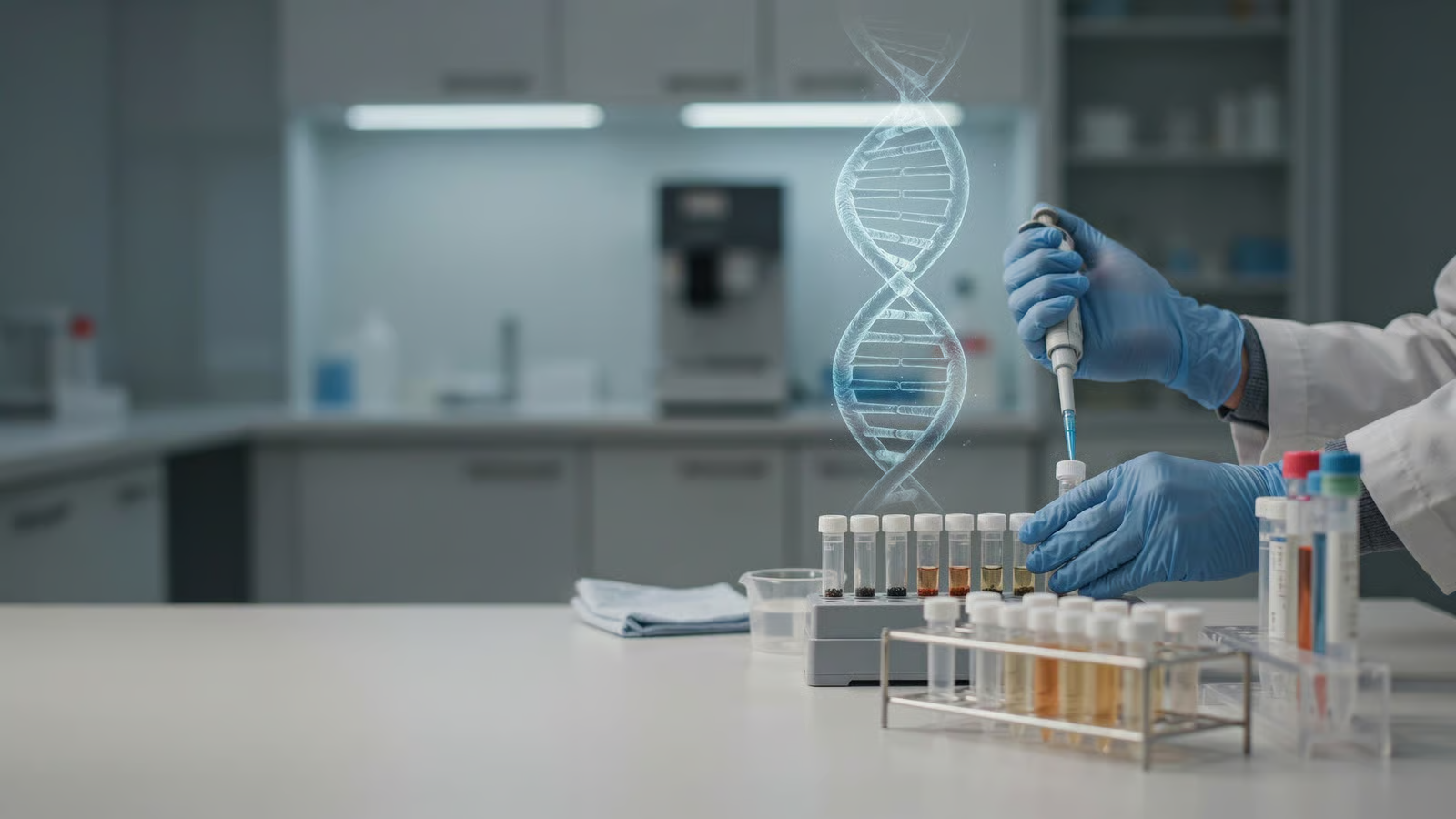
“High-quality DNA is not simply about obtaining DNA, it is about obtaining DNA that is suitable for the next step of the experiment”
Introduction
DNA extraction is a fundamental step in molecular biology and genomic research. Before DNA can be amplified, sequenced, or analyzed, it must be isolated from a biological sample with sufficient yield, purity, and integrity.
The quality of extracted DNA can directly affect downstream applications such as PCR, qPCR, genotyping, NGS, and whole-genome sequencing. The optimal extraction method depends on factors including the sample type, DNA requirements, and intended application.
In this guide, we explore the main DNA extraction methods, their applications, quality control considerations, and how to select the most appropriate approach for research workflows.
I.What Is DNA Extraction?
A typical extraction workflow includes four main steps:
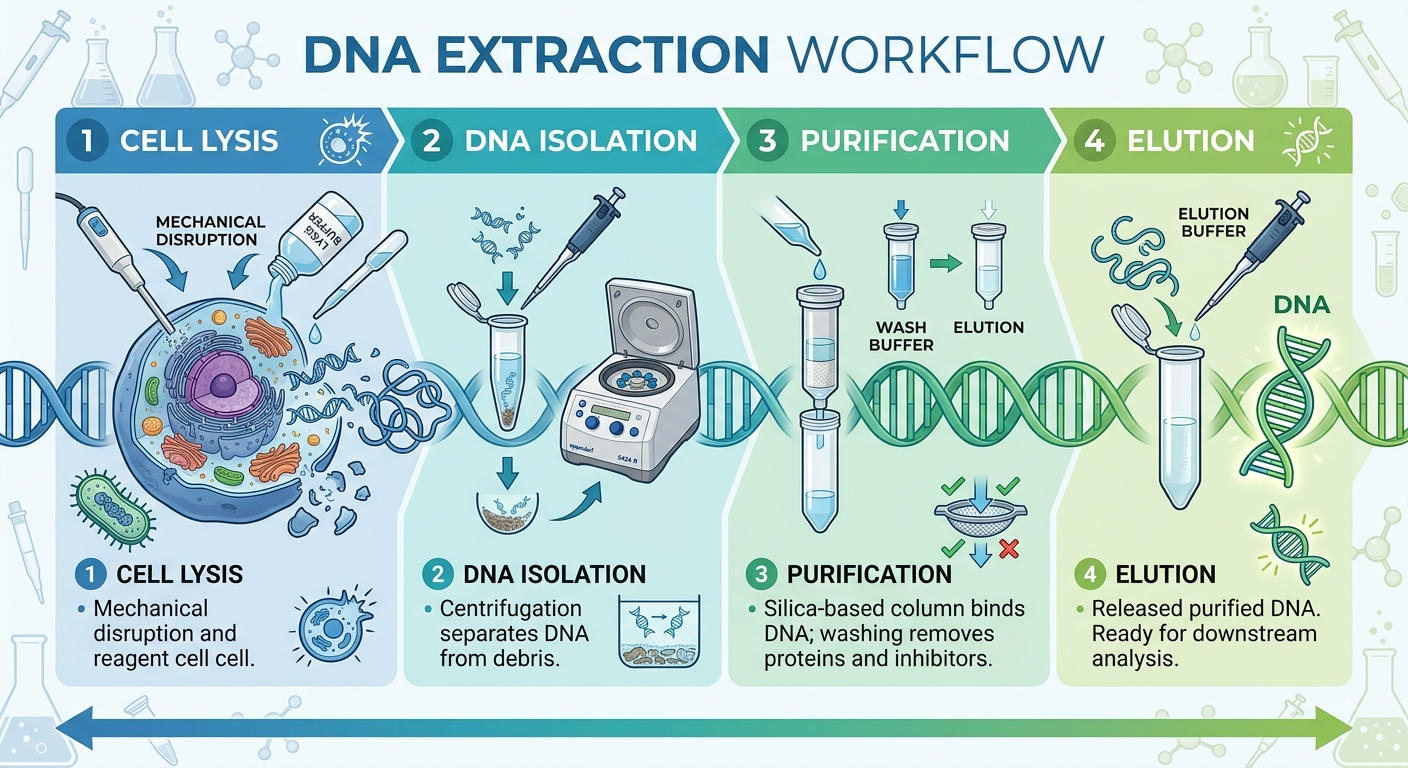
II. The Main DNA Extraction Methods
DNA extraction methods are based on different principles for releasing, separating, and purifying DNA from biological samples. The most commonly used approaches in research laboratories include silica column-based extraction, magnetic bead-based extraction, organic extraction, and precipitation-based methods.
Each method has specific advantages and limitations, and the choice depends on factors such as sample type, required DNA quality, processing capacity, and downstream application.
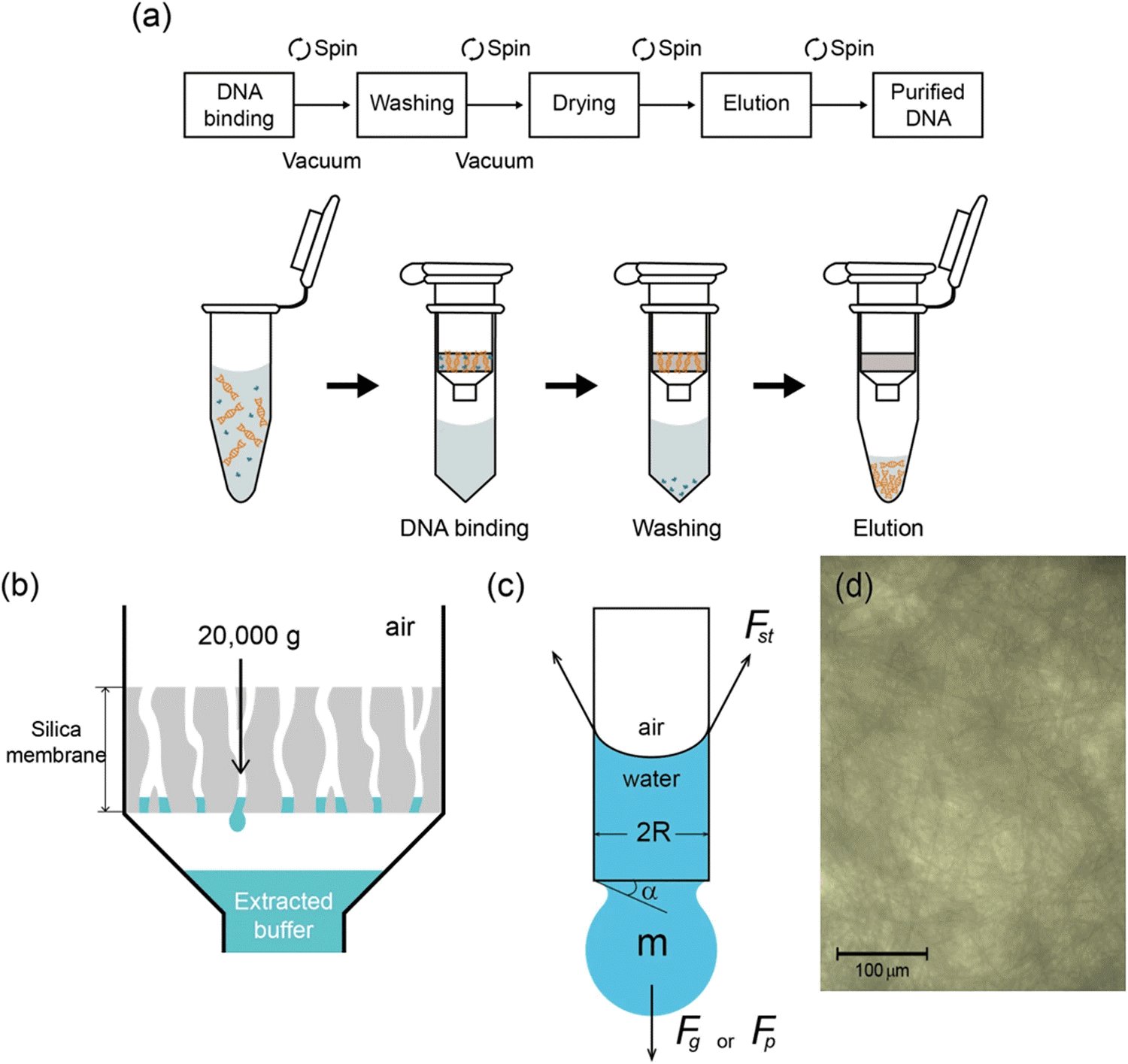
1. Silica Column-Based DNA Extraction
Silica column-based extraction is one of the most widely used methods for DNA purification.
Under specific binding conditions, DNA binds to a silica membrane while proteins and other contaminants are removed through washing steps.
The purified DNA is then recovered by elution.
→ This approach is commonly used for routine molecular biology applications because it offers a relatively simple workflow, consistent purification, and good DNA quality.
2. Magnetic Bead-Based DNA Extraction

Magnetic bead-based extraction uses functionalized magnetic particles to capture DNA from a lysed sample.
Magnets are then used to separate the beads from contaminants during washing, followed by DNA elution.
→ This method is particularly useful for high-throughput workflows and automated sample processing, making it suitable for laboratories handling large numbers of samples.
3. Organic Extraction
Organic extraction uses chemical reagents to separate DNA from proteins and other cellular components.
Although this approach can provide high-quality DNA, it generally involves more processing steps and requires careful handling of hazardous reagents.
→ For these reasons, many modern research laboratories use column- or magnetic bead-based methods for routine DNA purification.

4. Precipitation-Based DNA Extraction

Precipitation-based methods use salts and alcohols to precipitate DNA from a solution. The DNA can then be collected and resuspended for downstream use.
→ These methods can be useful when larger quantities of DNA are required, although they may involve more manual processing and can provide less consistent purification than some commercial column- or bead-based approaches.
III.Choosing the Right Method Based on Sample Type
The choice of DNA extraction method depends strongly on the biological sample being processed. Different samples can contain different cellular structures, contaminants, and levels of DNA, so a method that works well for blood may not be suitable for plant tissue, bacteria, or FFPE samples.
| Sample type | Main consideration |
|---|---|
| Blood | Efficient lysis and removal of proteins |
| Cultured cells | Consistent DNA recovery and purity |
| Tissue | Effective tissue disruption and lysis |
| Bacteria / fungi | Cell-wall disruption |
| Bacteria / fungi | Cell-wall disruption |
| Plant tissue | Removal of polysaccharides and polyphenols |
| Saliva / buccal samples | Variable DNA concentration and microbial DNA |
| FFPE tissue | DNA fragmentation and paraffin removal |
| Soil / environmental samples | Removal of PCR inhibitors |
IV. DNA Extraction Workflow
1. Sample Preparation
The sample is prepared to ensure efficient access to the biological material. Depending on the sample,
this may involve tissue disruption, cell collection, or homogenization.
2. Cell Lysis
Lysis breaks open cells and releases their DNA.
Chemical lysis buffers, detergents, enzymes, mechanical disruption, or combinations of these approaches may be used depending on the sample.
3. DNA Isolation and Purification
The released DNA is separated from proteins, cellular debris, salts, and other contaminants. The mechanism depends on the extraction technology for example, DNA can bind to a silica membrane or magnetic beads.
4. Washing and Elution
Washing removes remaining contaminants while retaining the DNA.
The purified DNA is then eluted into a suitable buffer or solution for downstream applications.
5. Quality Control
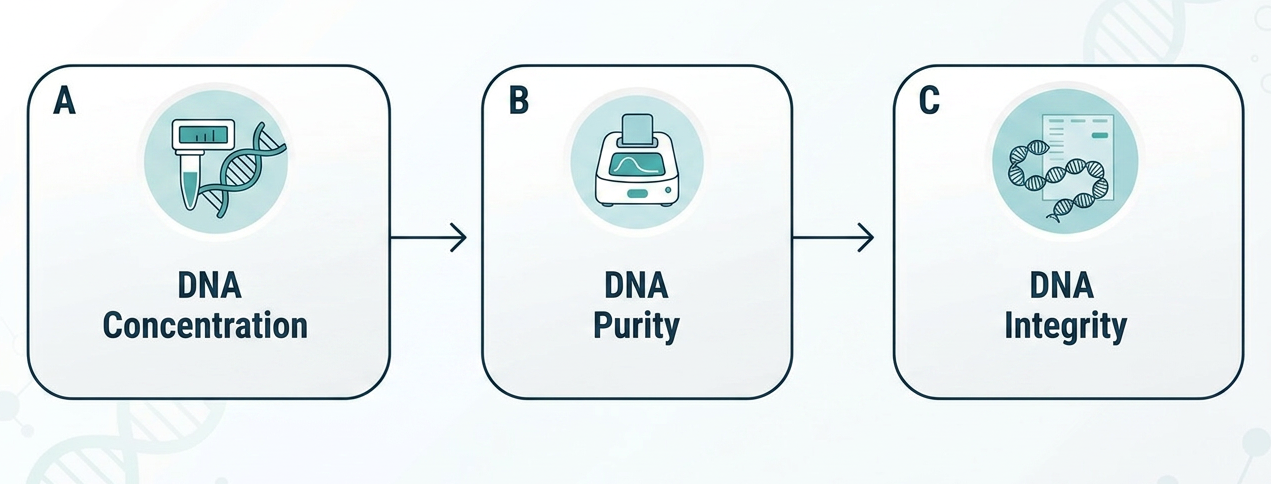
Before further analysis, the extracted DNA should be evaluated for concentration, purity, and integrity.
These parameters help determine whether the DNA is suitable for applications such as PCR, qPCR, or NGS

V. DNA Quality Control
Once DNA has been extracted, its concentration, purity, and integrity should be evaluated before proceeding to downstream applications. These parameters help determine whether the extracted DNA is suitable for molecular analysis and can also help identify potential problems during extraction
A. DNA Concentratioc
DNA concentration can be measured using UV spectrophotometry or fluorescence-based methods.
Fluorescence assays are generally more selective for double-stranded DNA, while spectrophotometry also provides information about sample purity.
B. DNA Purity
The A260/A280 and A260/A230 ratios are commonly used to assess DNA purity.
For pure DNA, an A260/A280 ratio around 1.8 is generally expected, while A260/A230 values around 2.0–2.2 are commonly associated with low levels of contaminants.
C. DNA Integrity
DNA integrity refers to whether the DNA remains intact or has undergone degradation. This can be particularly important for applications requiring high-molecular-weight DNA, such as whole-genome sequencing and some long-read sequencing workflows. Integrity can be evaluated using techniques such as agarose gel electrophoresis or automated fragment analysis.
VI. DNA Extraction for Downstream Applications
PCR and qPCR
For PCR-based applications, DNA should be sufficiently pure and free from substances that can inhibit amplification.
Consistent DNA concentration and effective removal of contaminants are important for reliable and reproducible results.

Genotyping and Molecular Analysis
Genotyping and other molecular assays require DNA that can be consistently amplified and analyzed.
Extraction quality can therefore influence the reliability of downstream genetic measurements.

NGS and Sequencing
NGS workflows can have more demanding DNA requirements, particularly regarding concentration, purity, and DNA integrity.
The appropriate extraction method should therefore be selected according to the sequencing strategy and library preparation workflow.

Whole-Genome and Long-Read Sequencing
Applications requiring long DNA molecules place greater emphasis on DNA integrity and high-molecular-weight DNA.
Extraction procedures should minimize mechanical and chemical degradation when these characteristics are essential for the intended analysis.

VIII. Recommended DNA Extraction Products
Choosing the right extraction solution depends on the sample type, required DNA quality, and downstream application.
→ Gentaur provides access to a broad range of DNA and RNA extraction and purification solutions for molecular biology research.
RNA Extraction Kit
RNA Extraction Kit
miRNA Extraction Kit
Soil RNA Extraction Kit
ADN Extraction Kit
VIRAMAG DNA/RNA EXTACTION KIT
Gel Extraction Kit
DNA Extraction Kit
Conclusion
DNA extraction is a critical first step in many molecular biology workflows, and the right method depends on the sample type, required DNA quality, downstream application, and laboratory workflow. From silica columns and magnetic beads to organic extraction and precipitation, each approach offers specific advantages for different research needs.
Selecting a suitable extraction solution can help researchers obtain high-quality, reliable DNA for applications such as PCR, qPCR, sequencing, NGS, genotyping, and genomic analysis.
With a broad range of DNA and RNA extraction and purification solutions, Gentaur supports researchers in selecting products suited to their sample types and molecular biology workflows.
Frequently asked questions
What is this article about?+
There is no single best method for every sample. The appropriate method depends on the sample type, required DNA quality, yield, processing time, and downstream application.
2. Which DNA extraction method gives the highest yield?+
DNA yield depends on both the sample and extraction protocol. Organic extraction and some magnetic bead- or column-based methods can provide high yields when properly optimized.
3. What is the difference between column-based and magnetic bead-based DNA extraction?+
Column-based methods use silica membranes to bind and purify DNA, while magnetic bead-based methods use functionalized beads. Magnetic bead workflows are particularly useful for automation and high-throughput processing.
4. How do I know if my extracted DNA is good quality?+
DNA quality is commonly evaluated by measuring concentration, purity, and integrity. These parameters help determine whether the DNA is suitable for applications such as PCR, sequencing, or NGS.
5. Can the same DNA extraction kit be used for all sample types?+
No. Different samples can contain different cellular structures, contaminants, and inhibitors. Kits are often optimized for specific sample types such as blood, tissue, bacteria, plants, or FFPE samples.
6. How should DNA be stored after extraction?+
Purified DNA is generally stored under conditions that minimize degradation. The appropriate temperature and storage conditions depend on the intended storage period and downstream application.
7. Which DNA extraction method is best for NGS?+
For NGS, the extraction method should provide high-quality, sufficiently pure, and intact DNA compatible with library preparation. The optimal method depends on the sample type and sequencing workflow.
8. How can I choose the right DNA extraction kit?+
Consider sample type, expected DNA yield, purity requirements, downstream application, number of samples, processing time, and automation requirements before selecting a kit.