Advanced Flow Cytometry Analysis: From High-Dimensional Cell Profiling to AI-Powered Single-Cell Research
Explore advanced flow cytometry analysis approaches, including spectral cytometry, single-cell profiling, AI-based data interpretation, and applications in biomedical research.
Introduction

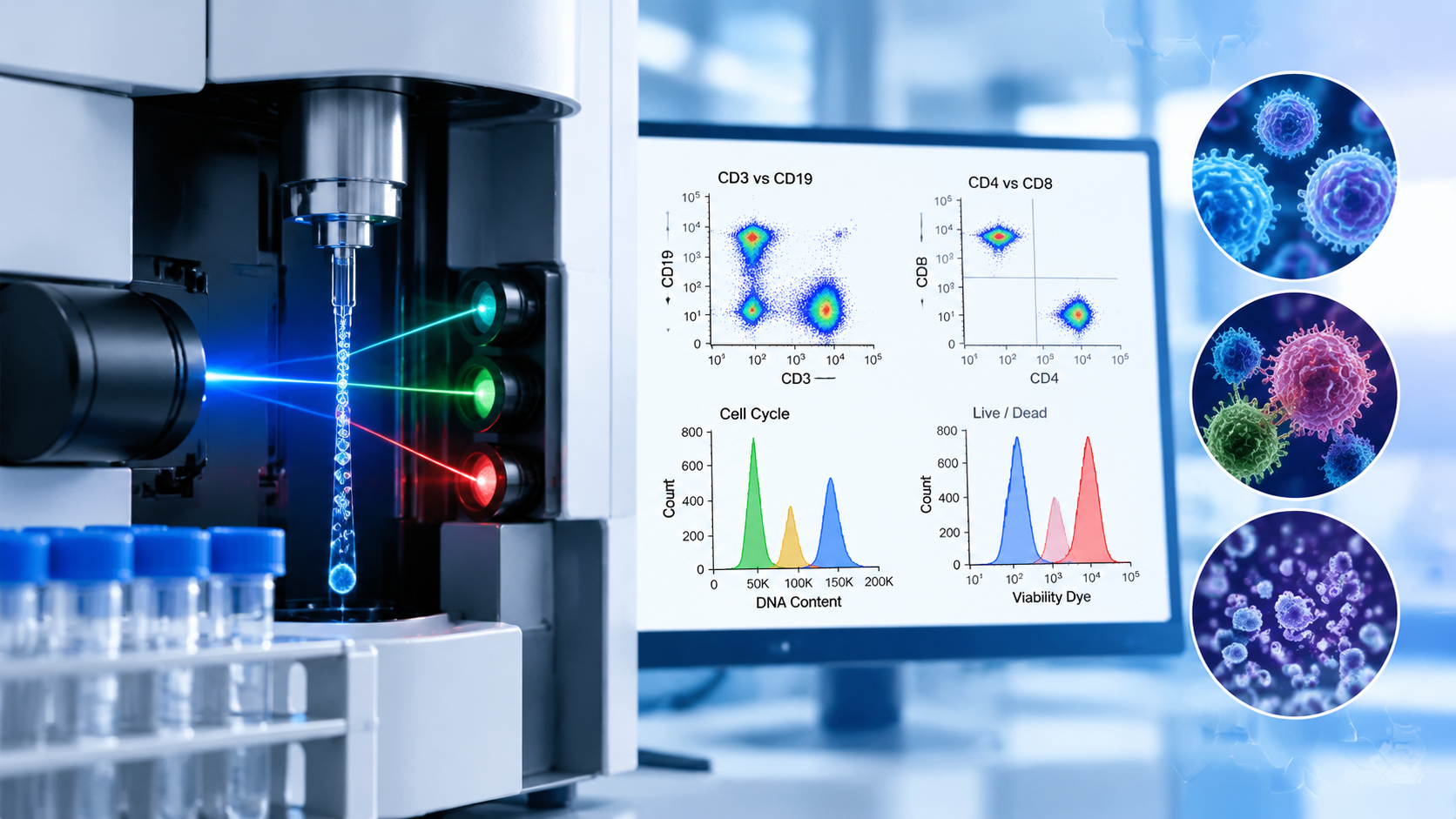
Modern biomedical research increasingly focuses on understanding cellular complexity at the single-cell level. Biological samples that appear homogeneous often contain multiple cell populations with different functions, activation states, and molecular signatures.
Advanced flow cytometry analysis has transformed from a simple cell counting technique into a powerful multiparametric platform capable of characterizing thousands of cellular features simultaneously.
Today, researchers use advanced flow cytometry approaches to investigate:
Rare immune cell populations
Tumor microenvironments
Cellular signaling pathways
Drug responses
Stem cell differentiation
Gene and cell therapy development
Biomarker discovery
The evolution of spectral flow cytometry, mass cytometry, imaging flow cytometry, and artificial intelligence-based analysis has expanded the capabilities of traditional cytometry toward deeper biological discovery.
Beyond Traditional Flow Cytometry: The Era of High-Dimensional Cell Analysis
Traditional flow cytometry focused mainly on measuring a limited number of fluorescent markers.
Modern platforms now allow researchers to analyze complex cellular profiles by combining:
Multiple fluorescent antibodies
Advanced detector systems
Computational analysis
Automated population identification
This shift allows scientists to move from asking:
"Which cells are present?"
to more advanced questions:
"What is the functional state of each cell population?"
and
"How do cellular populations change during disease progression or treatment?"
High-Dimensional Flow Cytometry: Understanding Cellular Complexity
Spectral Flow Cytometry: Expanding Multiparameter Analysis
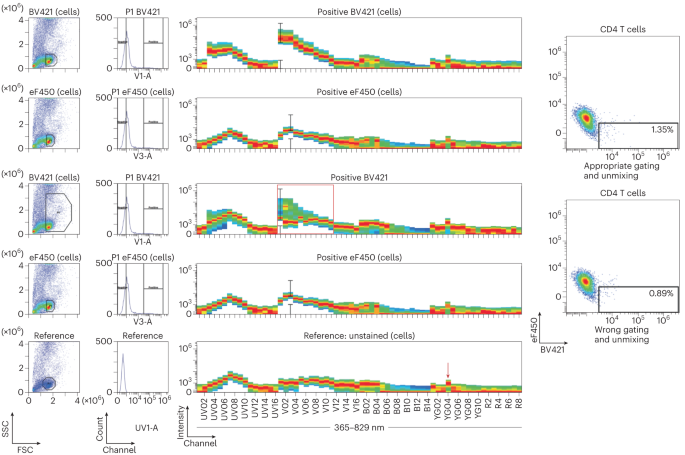
Flow Cytometry Data Analysis : Moving Beyond Manual Gating
Artificial Intelligence in Flow Cytometry Analysis

How to Optimize Cell Staining for Flow Cytometry ?
Imaging Flow Cytometry: Combining Morphology and Molecular Information
Imaging flow cytometry integrates :
Flow-based analysis
Fluorescence detection
Microscopy imaging
Unlike conventional flow cytometry, it provides visual information about individual cells.
Applications include :
Nuclear translocation studies
Cell morphology analysis
Protein localization
Cellular interaction studies
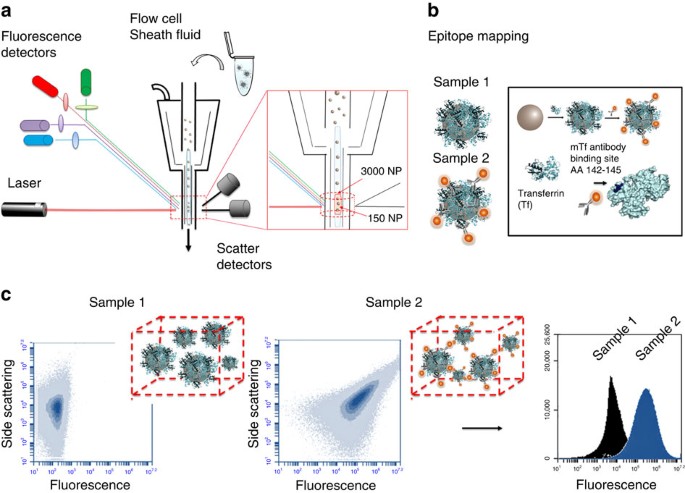
Nanoparticle Flow Cytometry: Studying Smaller Biological Structures
Challenges in Modern Flow Cytometry
Despite major technological advances, researchers still face challenges:
Large Data Complexity
High-dimensional datasets require advanced computational methods.
Standardization
Different laboratories may produce variations due to:
Instrument settings
Reagents
Analysis strategies
Experimental Design
Complex panels require careful optimization.
The Future of Flow Cytometry
Frequently Asked Questions (FAQ)
What is advanced flow cytometry analysis?+
Advanced flow cytometry analysis refers to the use of multiparameter technologies, computational tools, and high-dimensional approaches to characterize complex cellular populations.
How does AI improve flow cytometry analysis?+
AI helps automate cell population identification, improve data interpretation, optimize experimental design, and reduce analysis variability.
What is spectral flow cytometry used for?+
Spectral flow cytometry is used for high-parameter cellular profiling, immune monitoring, and complex biological research applications.
Why is flow cytometry important in cancer research?+
Flow cytometry allows researchers to analyze tumor cells, immune responses, biomarkers, and treatment effects at the single-cell level.
Can flow cytometry analyze blood samples?+
Yes. Flow cytometry blood tests are widely used to characterize immune cells, blood cell populations, and disease-associated biomarkers.
“Flow cytometry has evolved into a sophisticated single-cell analysis platform capable of revealing biological complexity that traditional methods cannot capture. With advances in spectral technologies, artificial intelligence, and high-dimensional analysis, modern flow cytometry enables researchers to investigate cellular systems with unprecedented depth. From immunology and cancer research to cell therapy and precision medicine, advanced flow cytometry analysis continues to accelerate scientific discovery.”